


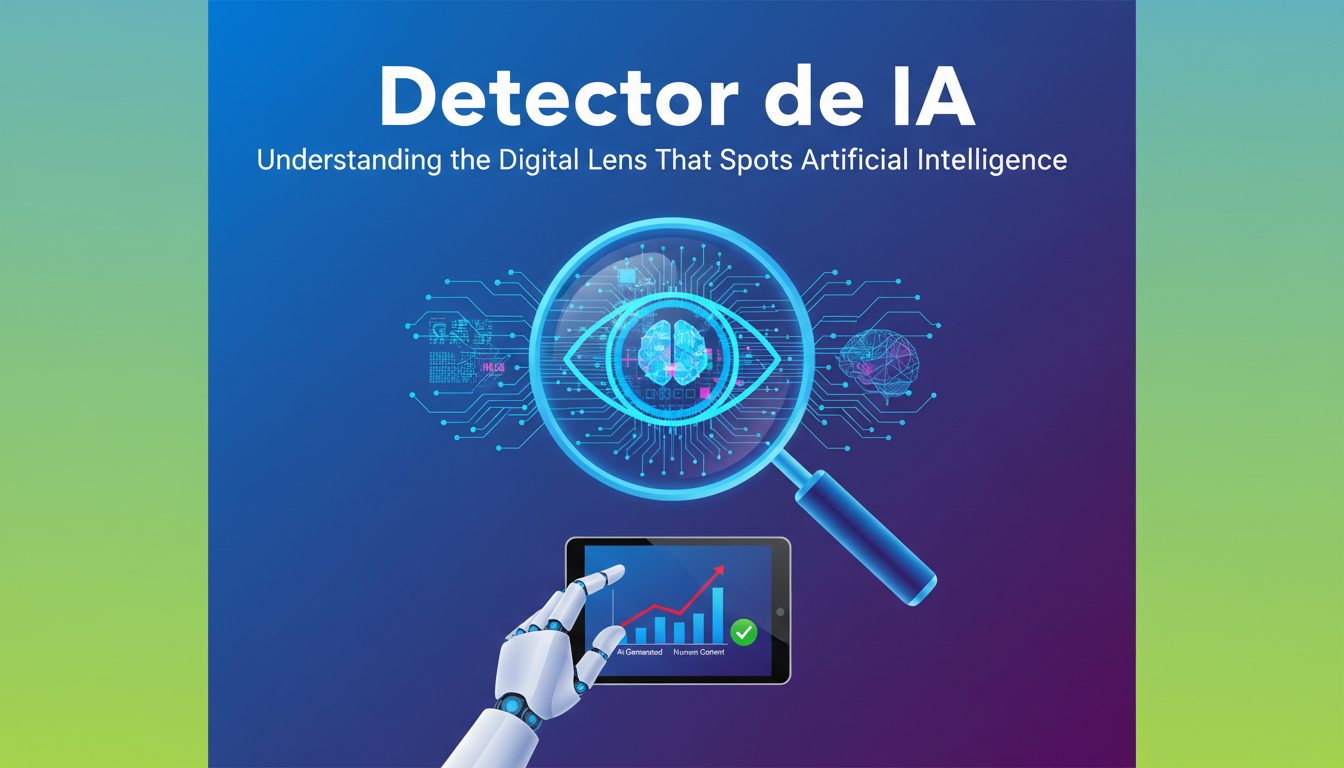
Detector de IA: Understanding the Digital Lens That Spots Artificial Intelligence
In a world where machines can write stories, design logos, compose emails, and even mimic human conversation, one question is becoming more important every day: who really created this content? This is where the concept of detector de ia enters the conversation, offering clarity in an era dominated by artificial intelligence.
A detector de ia is not just a technical tool; it is a modern solution designed to identify whether content was generated by a human or produced by an AI system. As digital spaces grow crowded with machine-generated material, the demand for transparency, authenticity, and originality continues to rise.
The Growing Need for AI Detection
Artificial intelligence has transformed how content is produced. From students using smart writing assistants to businesses automating marketing campaigns, AI is everywhere. While this innovation brings speed and efficiency, it also introduces challenges. Educational institutions worry about academic integrity, publishers seek originality, and search engines aim to maintain quality.
A detector de ia acts as a safeguard in this environment. It analyzes written material to determine patterns, structures, and signals commonly associated with AI creation. Rather than replacing creativity, it helps protect genuine human effort.
How a Detector de IA Works Behind the Scenes
At its core, a detector de ia examines text through advanced linguistic analysis. AI-generated content often follows predictable rhythms, sentence construction habits, and probability-based word choices. Detection systems study these elements and compare them with known human writing behaviors.
Instead of relying on simple keyword scanning, modern detection tools focus on:
-
Sentence variability
-
Natural inconsistency in tone
-
Emotional nuance
-
Contextual depth
Human writers tend to introduce subtle imperfections, personal perspectives, and unpredictable phrasing. A detector de ia measures these factors to estimate whether artificial intelligence played a role in the creation process.
Why Writers and Bloggers Care
For content creators, originality is currency. Search engines increasingly reward authentic material that provides real value to readers. If a blog post appears overly automated, it may lose credibility or ranking potential.
Using a detector de ia allows writers to review their work before publishing. It helps ensure that content maintains a natural, human-centered voice. This is especially important for bloggers, freelancers, and agencies that blend AI assistance with personal creativity.
Rather than discouraging AI usage, detection tools encourage responsible use—where technology supports ideas but does not erase individuality.
Educational Integrity and AI Awareness
Schools and universities face unique challenges in the AI age. Assignments that once reflected a student’s understanding can now be completed in seconds using smart tools. This makes fair assessment difficult.
A detector de ia supports educators by offering insights into submission authenticity. It does not replace judgment or teaching methods but adds another layer of evaluation. When used ethically, it opens conversations about learning, effort, and the proper role of technology in education.
Business and Professional Applications
In professional settings, credibility matters. Companies rely on reports, proposals, and communication that reflect expertise and trust. If stakeholders suspect automated content without disclosure, brand reputation can suffer.
By integrating a detector de ia into quality control processes, organizations can verify originality and maintain transparency. This is particularly valuable in industries such as journalism, marketing, legal services, and research publishing.
The Balance Between AI and Human Creativity
It is important to understand that a detector de ia is not an enemy of innovation. Artificial intelligence is a powerful tool when used responsibly. The goal of detection is not to ban AI, but to distinguish between machine-driven output and human expression.
Creative professionals often use AI for brainstorming, outlining, or editing assistance. Detection tools simply ensure that the final product still reflects authentic thought and personal voice.
This balance allows technology and creativity to coexist rather than compete.
Ethical Use and Responsible Implementation
As with any powerful technology, ethical use matters. A detector de ia should be used as a guide, not as a weapon. Over-reliance or misuse can lead to false assumptions or unfair conclusions.
Responsible users treat detection results as indicators, not absolute verdicts. Context, intent, and human review remain essential. When combined thoughtfully, AI tools and detection systems can raise overall content quality instead of limiting it.
Looking Ahead: The Future of AI Detection
As artificial intelligence continues to evolve, detection systems will also grow more sophisticated. Future versions of detector de ia tools may focus on deeper semantic understanding, emotional intelligence, and cross-language analysis.
The conversation will shift from simple identification toward transparency standards—where creators openly disclose how AI assisted their work. In this future, trust will be built through honesty rather than suspicion.
Final Thoughts
The rise of artificial intelligence has changed how the world writes, learns, and communicates. In response, the AI detector has become a vital companion in maintaining authenticity and trust.
Rather than fearing AI, we must learn to use it wisely. Detection tools help ensure that human creativity remains visible, valued, and respected in a rapidly automated digital landscape. When technology and responsibility move forward together, the result is a smarter, more transparent online world.
For More Blogs: Click Here