


How Air Pollution Control Devices Help Reduce Industrial Emissions
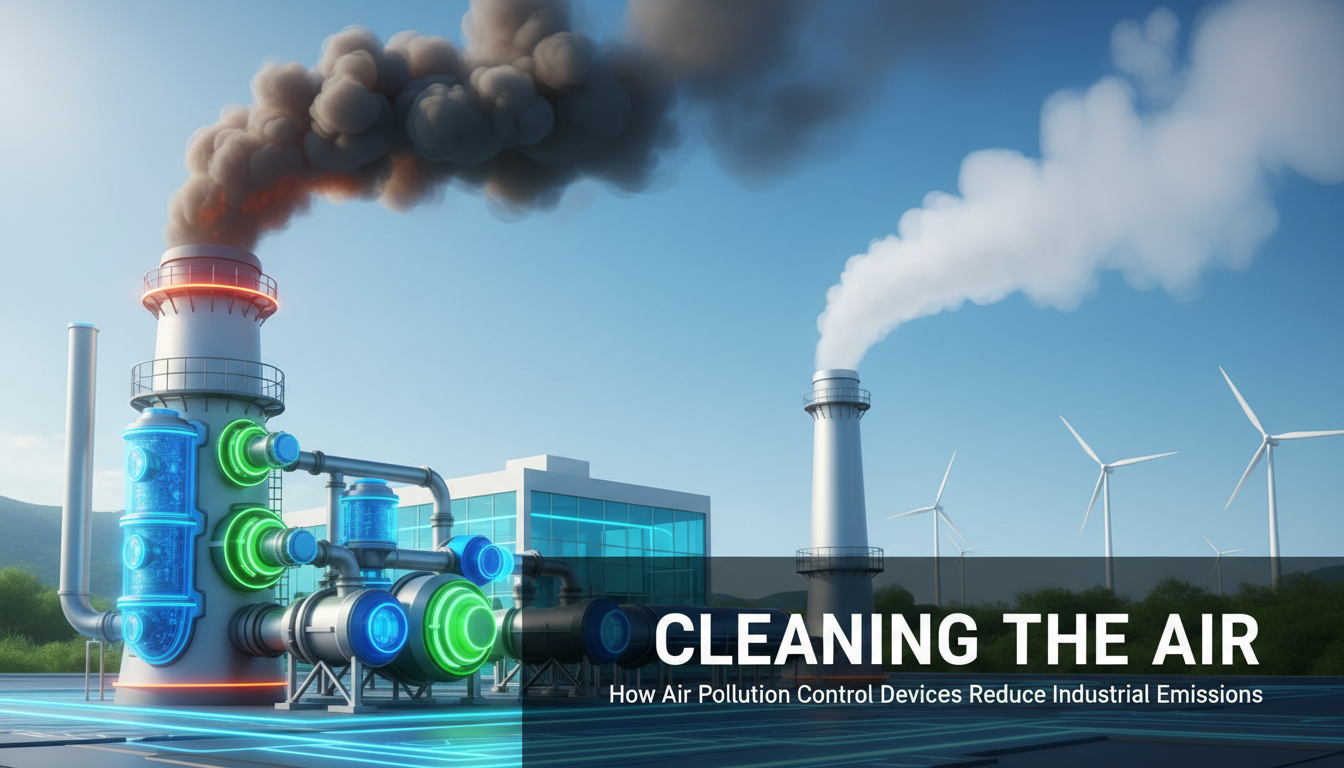
Industrial growth plays a vital role in economic development, but it also brings the challenge of managing emissions that affect air quality and public health. Industries release pollutants such as dust, smoke, gases, and fine particles into the atmosphere, making it essential to adopt effective control measures. This is where advanced air pollution control technologies come into action.
In this blog, we will understand how modern systems and monitoring solutions help reduce industrial emissions, while also exploring key technologies like Air Pollution Control Machine, Bag Filter Air Pollution Control, Suspended Particulate Matter (SPM) Analyzer, Continuous Emission Monitoring Station, and Automatic Weather Monitoring Station.
Understanding Industrial Emissions and Their Impact
Industrial emissions consist of harmful substances such as particulate matter, sulfur dioxide, nitrogen oxides, and volatile organic compounds. These pollutants can lead to environmental damage, respiratory issues, and regulatory penalties for industries.
To manage this, industries are now focusing on installing efficient Air Pollution Control Machine systems that capture, filter, and monitor emissions before they are released into the environment. These solutions not only help in compliance but also contribute to cleaner production processes.
What Are Air Pollution Control Devices?
Air pollution control devices are systems designed to remove contaminants from industrial exhaust streams. They work at different stages of the production process, ensuring that pollutants are minimized or eliminated before release.
EO Energy, known for its expertise in emission monitoring and environmental solutions, provides technologies that combine filtration, analysis, and real-time monitoring for better control over industrial emissions.
Role of Air Pollution Control Machine in Emission Reduction
An Air Pollution Control Machine acts as the primary system for treating industrial exhaust gases. These machines use mechanical, chemical, or electrostatic processes to remove pollutants.
They are widely used across industries such as manufacturing, power plants, cement, and chemicals. By capturing harmful particles and gases, these machines significantly reduce the environmental footprint of industrial operations.
The efficiency of such systems depends on proper design, installation, and maintenance. EO Energy focuses on providing integrated solutions that ensure optimal performance and long-term reliability.
Importance of Bag Filter Air Pollution Control Systems
One of the most commonly used filtration technologies is Bag Filter Air Pollution Control. These systems use fabric filters to trap dust and particulate matter from industrial exhaust.
Bag filters are highly effective in controlling fine particles, making them suitable for industries that generate a high volume of dust. The working mechanism is simple yet efficient—polluted air passes through fabric bags where particles get trapped, and clean air is released.
This method not only improves air quality but also helps industries meet emission standards set by regulatory authorities. Regular cleaning and maintenance ensure that these systems continue to perform efficiently.
Monitoring with Suspended Particulate Matter (SPM) Analyzer
While filtration systems remove pollutants, monitoring devices ensure that emission levels remain within permissible limits. A Suspended Particulate Matter (SPM) Analyzer plays a key role in measuring the concentration of airborne particles.
SPM analyzers provide accurate data on particulate levels in the air, helping industries track pollution trends and take corrective actions when necessary. Continuous monitoring also supports compliance with environmental norms and improves transparency.
EO Energy integrates advanced monitoring solutions that help industries maintain control over their emission outputs in real time.
Continuous Emission Monitoring Station for Real-Time Data
A Continuous Emission Monitoring Station is essential for industries that need constant tracking of emissions. These systems measure pollutants such as carbon monoxide, sulfur dioxide, and particulate matter directly from the source.
Real-time data allows industries to identify any deviations and respond immediately. This proactive approach helps in avoiding penalties and ensures consistent environmental performance.
With digital integration, these systems can also provide automated reports and remote monitoring capabilities, making emission management more efficient and reliable.
Role of Automatic Weather Monitoring Station in Pollution Control
Environmental conditions such as wind speed, temperature, and humidity significantly impact how pollutants disperse in the atmosphere. An Automatic Weather Monitoring Station helps industries understand these conditions.
By analyzing weather patterns, industries can predict pollution dispersion and adjust their operations accordingly. This data also supports environmental impact assessments and regulatory reporting.
Combining emission monitoring with weather data creates a comprehensive pollution management strategy, ensuring better decision-making and environmental protection.
Benefits of Using Advanced Air Pollution Control Solutions
Adopting modern air pollution control systems offers multiple benefits for industries. It helps in maintaining compliance with environmental regulations, reduces health risks, and enhances operational efficiency.
Another important advantage is improved brand reputation. Industries that invest in sustainable practices are viewed more positively by customers, stakeholders, and regulatory bodies.
EO Energy provides solutions that not only focus on emission control but also on long-term sustainability and operational efficiency.
How EO Energy Supports Industries
EO Energy offers a range of solutions designed to help industries manage emissions effectively. From Air Pollution Control Machine systems to advanced monitoring technologies like Continuous Emission Monitoring Station and Suspended Particulate Matter (SPM) Analyzer, the focus is on delivering reliable and efficient performance.
By combining filtration systems like Bag Filter Air Pollution Control with monitoring tools and weather analysis through Automatic Weather Monitoring Station, EO Energy ensures a complete approach to emission management.
Conclusion
Reducing industrial emissions is no longer optional—it is a necessity for sustainable growth and environmental protection. Air pollution control devices play a crucial role in achieving this goal by filtering pollutants, monitoring emissions, and providing actionable insights.
With the right combination of technologies such as Air Pollution Control Machine, Bag Filter Air Pollution Control, Suspended Particulate Matter (SPM) Analyzer, Continuous Emission Monitoring Station, and Automatic Weather Monitoring Station, industries can significantly reduce their environmental impact.
EO Energy continues to support industries with practical solutions that align with modern environmental standards and operational needs.
Contact Us
If you are looking to implement effective air pollution control solutions for your industry, EO Energy is here to assist you. Our team can guide you in selecting the right systems, optimizing performance, and ensuring compliance with environmental regulations.
Reach out to EO Energy today to discuss your requirements and explore solutions tailored to your industrial needs.
FAQs
1. What is an Air Pollution Control Machine?
An Air Pollution Control Machine is a system designed to remove harmful pollutants from industrial exhaust before releasing it into the environment.
2. How does Bag Filter Air Pollution Control work?
It uses fabric filters to trap dust and particulate matter from polluted air, allowing only clean air to pass through.
3. Why is a Suspended Particulate Matter (SPM) Analyzer important?
It measures the concentration of airborne particles, helping industries monitor and control pollution levels effectively.
4. What is a Continuous Emission Monitoring Station?
It is a system that provides real-time data on industrial emissions, ensuring compliance with environmental standards.
5. How does an Automatic Weather Monitoring Station help in pollution control?
It tracks environmental conditions like wind and temperature, helping industries understand pollutant dispersion and make informed decisions.

