


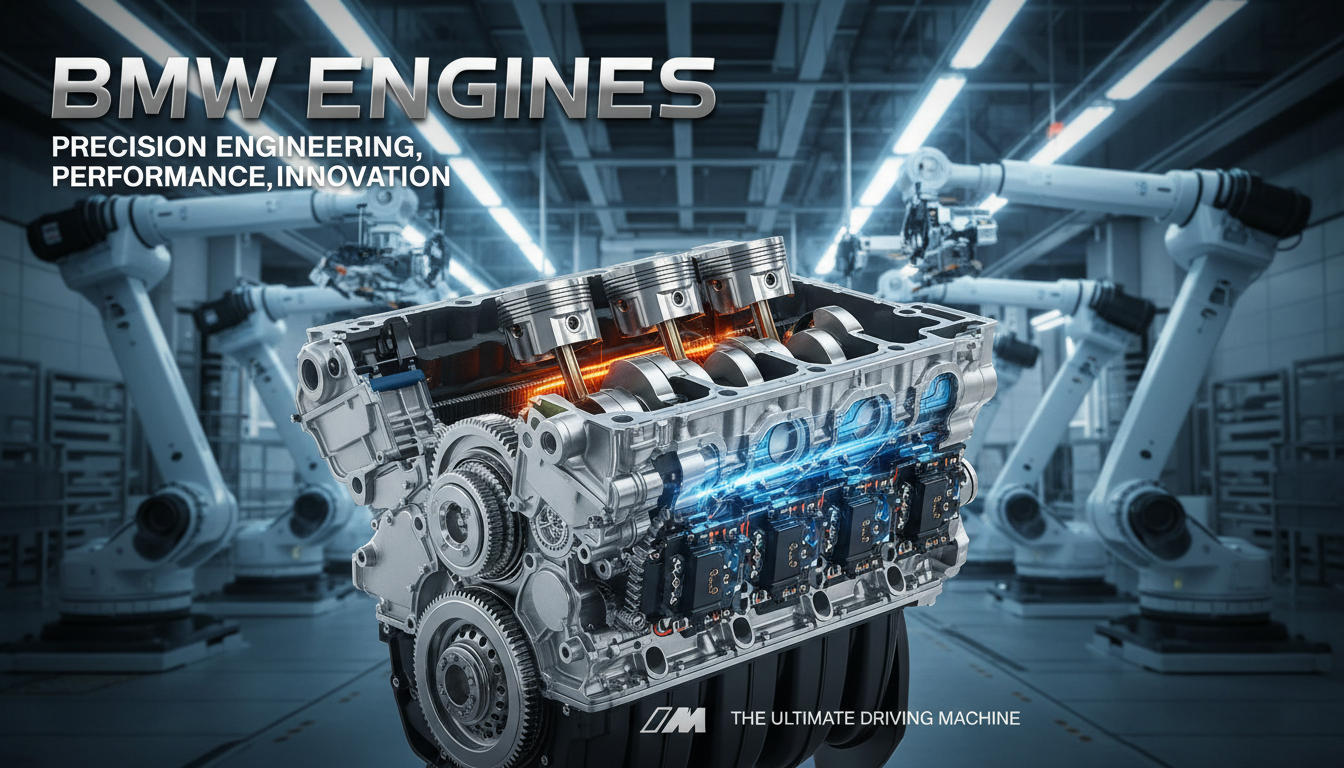
BMW Engines: Precision Engineering, Performance, and Innovation
Introduction
BMW (Bayerische Motoren Werke) is globally recognized as one of the most prestigious automotive brands, known for its commitment to performance, luxury, and engineering excellence. At the heart of every BMW vehicle lies a powerful and refined engine designed to deliver the brand’s signature “Ultimate Driving Machine” experience. Over decades, BMW engines have evolved through continuous innovation, combining cutting-edge technology with precision craftsmanship. This article explores BMW engine history, design philosophy, engine types, advanced technologies, performance features, reliability, and future developments.
The History of BMW Engine Development
BMW began its journey in 1916 as an aircraft engine manufacturer, which laid the foundation for its deep expertise in high-performance power units. The company later transitioned into motorcycle and automobile engines, bringing aviation-level precision into road vehicles.
Throughout the decades, BMW engines gained a reputation for smoothness, balance, and power delivery. Iconic inline-six engines became a brand hallmark, while continuous advancements helped BMW remain competitive in motorsport and consumer markets alike. From naturally aspirated engines to turbocharged and hybrid systems, BMW’s engine evolution reflects its dedication to innovation.
BMW’s Engineering Philosophy
BMW engine development is guided by a core philosophy: performance without compromise. Engineers focus on achieving the perfect balance between power, efficiency, reliability, and driving pleasure.
Key principles include:
-
Optimal weight distribution for better handling
-
Smooth and responsive throttle performance
-
High-revving capability with refined sound
-
Long-term durability with advanced materials
BMW engines are designed not just to move a vehicle, but to enhance the emotional connection between the driver and the road.
Types of BMW Engines
BMW produces a wide range of engines to suit different vehicle classes, from compact sedans to high-performance sports cars and SUVs.
Inline Engines
BMW is famous for its inline-four and inline-six engines. Inline engines offer excellent balance and smooth operation due to their symmetrical design. The inline-six, in particular, is celebrated for its linear power delivery and refined driving feel.
V-Type Engines
BMW also manufactures V8 and V12 engines, mainly for luxury and performance models. These engines deliver immense power, rapid acceleration, and a distinctive exhaust note, making them ideal for flagship vehicles and high-performance M models.
Diesel Engines
BMW diesel engines are known for strong torque and fuel efficiency. Designed for long-distance driving, these engines combine low fuel consumption with impressive pulling power, making them popular in European and international markets.
BMW TwinPower Turbo Technology
One of BMW’s engine most significant innovations is TwinPower Turbo technology. Despite the name, it does not always mean two turbochargers; instead, it refers to a combination of advanced features that enhance engine efficiency and performance.
Key components include:
-
Turbocharging for increased power output
-
Direct fuel injection for precise combustion
-
Variable valve timing for optimized airflow
-
Valvetronic system for throttle-free load control
This technology allows BMW engines to produce more power while consuming less fuel and emitting fewer emissions.
BMW M Performance Engines
BMW M engines represent the pinnacle of the brand’s performance engineering. Developed by BMW’s motorsport division, these engines are designed for extreme driving conditions.
M engines feature:
-
Higher boost pressure and reinforced components
-
Advanced cooling systems
-
Lightweight internal parts
-
Aggressive tuning for maximum power
Whether on the racetrack or the open road, BMW M engines deliver exhilarating acceleration and precise control, setting benchmarks in the performance car segment.
Fuel Efficiency and Emissions Control
BMW continuously works to improve fuel efficiency without sacrificing performance. Advanced engine management systems monitor driving conditions in real time, adjusting fuel delivery and airflow for optimal efficiency.
Emission control technologies include:
-
High-precision catalytic converters
-
Particulate filters
-
Start-stop systems
-
Intelligent energy management
These innovations help BMW engines meet strict global environmental regulations while maintaining driving pleasure.
Reliability and Engine Longevity
BMW engines are engineered for durability, but like all high-performance machines, proper maintenance is essential. High-quality materials such as aluminum alloys, forged components, and advanced cooling systems contribute to long engine life.
Regular oil changes, proper servicing, and the use of recommended fuels play a crucial role in maintaining BMW engine performance. When maintained correctly, BMW engines can deliver reliable performance for many years.
BMW Hybrid and Electric Powertrains
As the automotive industry moves toward sustainability, BMW has expanded its lineup to include hybrid and electric powertrains. Hybrid engines combine internal combustion engines with electric motors to improve efficiency and reduce emissions.
BMW’s electric motors deliver instant torque, while hybrid systems provide smooth transitions between power sources. This approach allows BMW to preserve driving dynamics while embracing environmentally friendly solutions.
Future of BMW Engine Technology
BMW continues to invest heavily in research and development. Future engine technologies focus on cleaner combustion, alternative fuels, and electrification.
Key future goals include:
-
Reduced carbon emissions
-
Increased use of renewable energy sources
-
Enhanced hybrid systems
-
Fully electric performance vehicles
BMW aims to redefine performance in the era of sustainable mobility without compromising its core values.
Conclusion
BMW engines stand as a symbol of precision engineering, innovation, and driving excellence. From iconic inline-six engines to powerful M performance units and advanced hybrid systems, BMW continues to push the boundaries of what an engine can achieve. By combining performance, efficiency, and reliability, BMW engines deliver an unmatched driving experience that remains true to the brand’s legacy. As technology evolves, BMW is well-positioned to lead the future of engine development while maintaining its reputation as the Ultimate Driving Machine.
For more information.

 English
